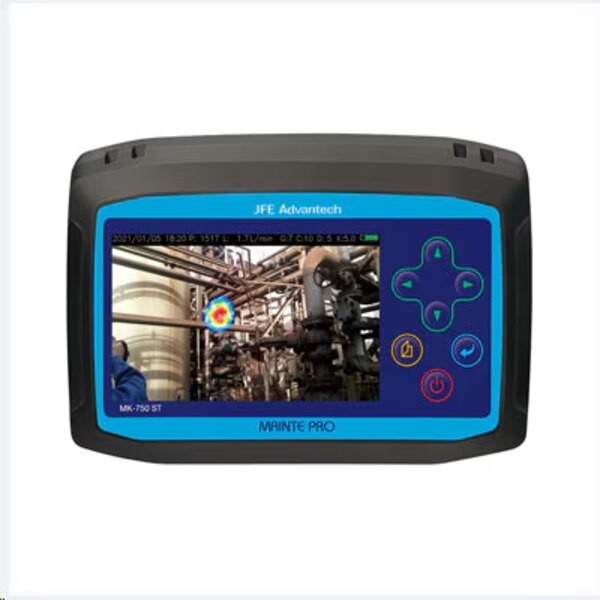
A gas leak viewer belongs with trained personnel who understand both the electrical asset and the gas system around it, not with every maintenance crew carrying a camera. By the end, you will be able to identify the right users, match the instrument to specific utility assets and gases, and set the inspection, safety and escalation responsibilities before work begins.
Key takeaways
- Assign trained operators who understand the asset, permit and electrical hazards.
- Match the viewer’s detection principle to the gas and equipment under inspection.
- Record leak location, evidence, repair action and follow-up verification.
- Use Mumbai site controls and documented service support before deployment.
Assign the viewer to teams that understand the asset and the permit
A gas leak viewer belongs with personnel who understand both the substation asset and the permit controlling access to it. Primary operators include:
- Substation maintenance technicians
- GIS and circuit-breaker specialists
- Utility gas-inspection teams
- Commissioning contractors
- Asset-integrity engineers
- Facility engineers
- Safety officers
- Condition-monitoring contractors
The strongest gas leak viewer users in mumbai are not simply camera operators. They can connect an indication with a specific high-voltage asset, likely leak point and authorised maintenance decision.
| Role | Responsibility | Authority |
|---|---|---|
| Trained operator | Scan, confirm the indication from another angle and record the asset tag, image and conditions | No authority to switch or isolate |
| Electrical or asset engineer | Evaluate the finding against gas density, pressure trend, alarm status and maintenance history | Recommend repair and priority |
| Utility’s authorised person | Control isolation, repair approval and return to service | Decide access, switching and restoration |
A contractor can perform the scan without receiving authority to switch, isolate equipment or enter a restricted area. Every gas leak viewer for utility teams must operate under the asset owner’s permit-to-work, job briefing, switching procedure, approach boundaries and PPE rules.
Before scanning, confirm that the operator knows the equipment layout, likely leak points, imaging limitations and emergency arrangements. Safety officers and facility engineers support those controls; they do not replace the authorised person’s decision.
Match the user and instrument to the gas-filled equipment
Assign a gas leak viewer for substation maintenance to assets containing pressurised gas, not to every electrical-maintenance crew. The strongest use case in Mumbai is compact urban GIS beside buildings, cable basements, control rooms and high-voltage breakers, where a small leak is hard to locate by sound or pressure trend alone.
| Asset or system | Leak points to inspect | Gas and instrument check |
|---|---|---|
| SF6 circuit breakers and GIS | Flanges, valve stems, density-monitor connections, burst discs, pipework | Confirm optical-gas-imaging support for SF6 |
| Disconnectors, current transformers and voltage transformers | Enclosures, seals and gas connections | Confirm the equipment’s SF6 service |
| Cable terminations and gas-handling couplings | Cable-sealing ends, couplings and recently disturbed fittings | Verify the viewer’s target-gas specification |
| Compressed-air systems and pneumatic actuators | Hose joints, valves and actuator fittings | Include them only when the specification explicitly supports air leaks |
Do not assume that an SF6 viewer detects nitrogen, hydrogen, refrigerants or another gas. Match the instrument to the declared gas, detection principle and site conditions before assigning it.
This tool suits GIS and circuit-breaker technicians, commissioning contractors, asset-integrity engineers, utility gas-inspection teams and condition-monitoring contractors. Teams working only on oil-filled or dry-type transformers, batteries, relays or ordinary low-voltage distribution equipment usually have no gas-viewing task unless pressurised gas-insulated equipment is also present.
Use it for condition assessment and leak localisation during planned surveys, commissioning and fault investigation. A no-gas task remains a no-viewer task.
Check the detection principle before you trust a camera specification
A gas leak viewer for utility teams is trustworthy only when its specification identifies how it detects gas, not merely that it produces an infrared image. Optical gas imaging, acoustic sensing and other visualisation principles behave differently; a conventional thermal camera is not an SF6 viewer simply because it displays infrared radiation.
1. Confirm the target gas—SF6, compressed air, nitrogen, hydrogen or a refrigerant—and the stated detection sensitivity. For optical systems, require the frequency or spectral range; for acoustic systems, require microphone type, microphone count and frequency range.
2. Require the usable stand-off distance, field of view, focus range, camera and microphone configuration, and image-recording method. Check battery endurance, report export, asset-tag annotation and whether repeated scans produce comparable results.
3. Ask whether the instrument works in daylight, darkness, low contrast, wind and noisy substations. Require manufacturer performance verification, calibration arrangements and defined test conditions rather than accepting a generic “leak detection” claim.
Inspection conditions can defeat a good instrument: wind disperses a plume, distance reduces apparent detail, and the wrong viewing angle hides the source. Warm or moving backgrounds reduce contrast, while guards and covers obstruct the line of sight.
A no-indication result does not prove a leak-tight enclosure. Change distance or angle, inspect under suitable conditions, then confirm the suspected point with an appropriate conventional detector or leak-rate method. A viewer locates an indication; it does not establish gas concentration, pressure or mass loss.
Give the operator a workflow that ends in a verified repair
Begin with an approved permit, confirmed switching status, a defined exclusion zone, the high-voltage approach boundary, arc-flash boundary, access route and ventilation plan. An authorised person controls entry; possession of a viewer does not authorise a contractor to approach energised equipment or isolate it.
1. Scan known leak points first: flanges, valve stems, density-monitor connections, burst-disc assemblies, pipe joints, cable-sealing ends and recently disturbed fittings.
2. Sweep the wider compartment or pipework while maintaining the required clearance from energised equipment and pressurised vessels.
3. If an indication appears, change the viewing angle and distance. Confirm plume movement and identify the exact fitting, joint or seal rather than marking only the general bay.
4. Record the asset tag, bay, equipment position, date, gas service, image, and weather or ventilation conditions. Call the finding a suspected leak until engineering evidence confirms it.
5. Escalate the record to the authorised engineer for repair planning. Pair the image with pressure or density records, a suitable probe, a leak-rate method, or an approved repair-and-retest procedure.
6. Apply the gas-handling procedure for recovery, storage, filtration, filling and emissions control. After repair, repeat the scan and complete the approved retest; that before-and-after record verifies the repair.
A gas leak viewer for substation maintenance does not prove de-energisation, measure gas concentration, make switchgear safe, or quantify lost SF6. In GIS rooms, trenches and basements, add oxygen-deficiency controls: visual imaging is not atmosphere monitoring.
Build the decision around Mumbai site controls and documented service capability
Readiness is proven by a signed responsibility matrix, not by owning the camera. For who should use a gas leak viewer for utility maintenance in Mumbai, require the operator, evaluating engineer and authorised person to be named before work starts.
1. Assign operator training and gas compatibility to a competent substation or inspection technician. Record the target gas—SF6, nitrogen, hydrogen, refrigerant or compressed air—and confirm the viewer’s sensitivity and stand-off distance.
2. Assign permit approval and electrical isolation to the asset owner’s authorised person. Apply the Central Electricity Authority’s Measures relating to Safety and Electric Supply Regulations, 2023, the owner’s switching instructions and the site-specific contractor induction; do not invent operating limits for the viewer.
3. Assign leak significance and repair authority to the electrical or asset engineer. A contractor may scan without authority to switch, isolate, enter restricted areas or approve repairs.
4. Assign SF6 recovery, storage, filtration, filling and emissions records to the qualified gas-service team under a procedure aligned with IEC 62271-4 and the utility’s environmental and gas-management records.
5. Assign retesting and record retention before release to service. Keep the asset tag, images, conditions, repair evidence and verification result.
Gas leak viewer users in Mumbai gain particular value in compact GIS substations: source localisation during planned inspections or abnormal top-up investigations needs no hose connection to a pressurised compartment, but engineering confirmation remains necessary. Myriad Industrial Solutions LLP can help compare specifications, demonstrations and documented workflows.
Tie selection to target gas, sensitivity, stand-off distance, site conditions, reporting and verification support—not a generic leak-finding claim.
Related product
 | Leak viewer Discover the cutting-edge GAS LEAK VIEWER, designed for unparalleled efficiency in detecting gas leaks with precision. View product → |
Frequently asked questions
Who should use a gas leak viewer for utility maintenance?
Assign it to trained utility operators, protection and testing specialists, or contractors who understand the substation asset, electrical hazards and access permit.
How do you match a gas leak viewer to substation equipment?
Identify the gas-filled equipment first, then confirm that the viewer detects that gas at the required distance, sensitivity and operating conditions.
What should an operator do after finding a gas leak?
Record the asset and leak location, preserve visual evidence, raise the repair, and repeat the inspection to verify that the repair stopped the leak.
What should Mumbai utility teams check before using a gas leak viewer?
Check site access controls, permit requirements, operator competence, equipment suitability and the supplier’s documented calibration, training and service capability.
Keywords