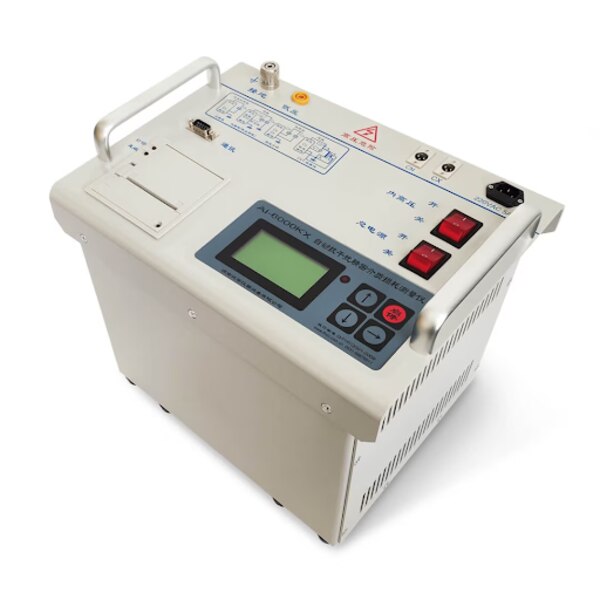


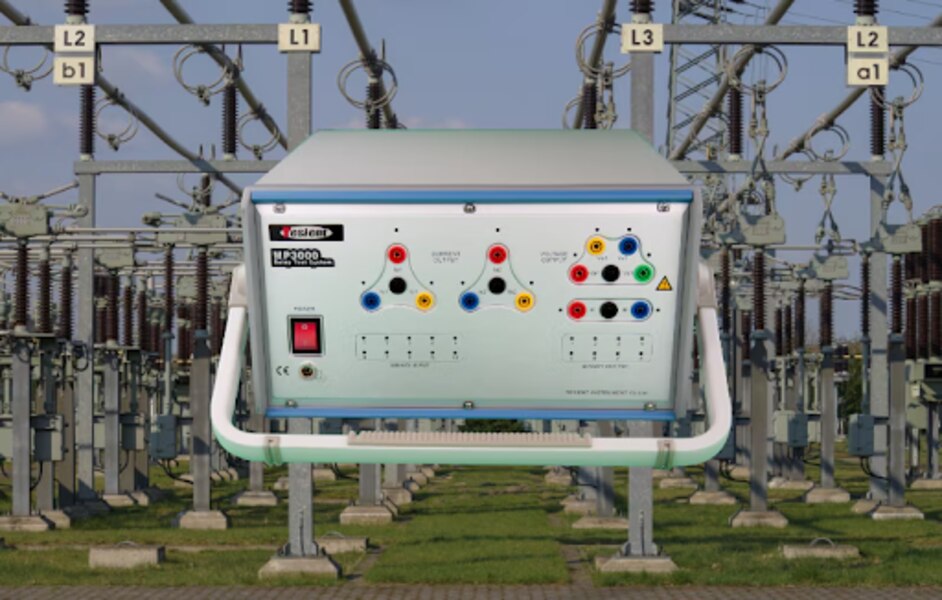
The answer depends on your plant’s relay population, protection schemes, outage costs, testing frequency and in-house competence—not simply on whether protective relays are installed. By the end, you can decide whether to own relay-testing equipment, arrange access through a contractor or central test department, and define which tests your plant actually requires.
Key takeaways
- Own a test system when your team makes relay-performance decisions or performs commissioning.
- Secondary injection verifies relay logic and trip timing, not the complete primary electrical system.
- Create a written test plan covering settings, connections, safety controls, results, and sign-off.
- Compare channels, software, automation, portability, support, and calibration before buying.
Which industrial engineering roles need relay-testing capability?
Not every industrial engineering role needs hands-on access to a protection relay test system. The practical question is not simply “do industrial engineers need a protection relay for test system?” It is whether the role owns relay performance decisions, executes tests, or only supplies design information.
| Role | Direct access need | Hands-on responsibility |
|---|---|---|
| Design engineer | Usually indirect | Specify protection, review coordination studies and approve settings; use test results without operating the test set. |
| Plant electrical engineer | Direct access is valuable | Coordinate isolation, approve settings, witness tests and investigate trips; perform testing if the plant keeps that competence in-house. |
| Maintenance engineer | Direct access is valuable when testing is frequent | Run repeatable tests after maintenance, firmware changes, setting changes, nuisance trips or outages. |
| Commissioning engineer | Direct access is usually essential | Verify new relays, logic, trip outputs and interfaces before energisation; document acceptance results. |
| Protection specialist | Direct access is essential | Create test plans, interpret pickup and timing results, diagnose schemes and supervise complex testing. |
The protection relay testing need follows technical responsibility and response time, not job title. A maintenance engineer at a small plant may use a contractor, while a design engineer assigned to commissioning may need temporary hands-on access.
Choose a contractor, rental unit or central test department when relays are few and standardised. In-house capability earns its place when outages are frequent, assets are remote, relay manufacturers vary, or a missed trip carries serious safety or production consequences.
Access still requires trained personnel, controlled CT secondary circuits, approved isolation and a documented return-to-service check.
When does access justify owning a test system?
Ownership is justified when waiting for outside support costs more than keeping testing capability ready. A small plant with standardized relays, infrequent outages and low-consequence loads can use a qualified testing contractor instead.
The case strengthens when you face repeated relay trips, planned shutdown testing, new relay commissioning, protection-setting changes, transformer or motor protection maintenance, nuisance trips or failure investigations. A protection relay test system benefits the plant by shortening diagnosis and repeating the same test points after a setting or firmware change.
Choose the access model that matches the work:
- Hire a testing contractor when testing is periodic, specialist schemes are rare, and your team cannot maintain procedures, calibration and interpretation skills.
- Use a central corporate test department when several sites share equipment, approved methods and competent protection engineers, but each plant does not need immediate access.
- Rent equipment when a shutdown, commissioning project or investigation creates a temporary demand, and your staff can operate the system safely.
- Buy an in-house system when trips require rapid answers, outages occur frequently, assets are remote, or relays vary by manufacturer and function. This is the strongest case for a relay test system for maintenance engineers.
Do not count relay quantity alone. Compare annual test hours, outage duration, travel and contractor availability against the consequence of a missed trip or incorrect operation; high-voltage transformers, large motors and process-critical feeders raise the value of rapid, repeatable testing. A test system still requires trained users and approved settings.
What does secondary injection prove—and what remains untested?
A secondary-injection system proves whether the relay responds correctly to signals at its terminals. By applying controlled current and voltage, it measures pickup current, operating time and reset behaviour; checks trip outputs, alarms and binary inputs; and exercises phase sequence, directional, differential, overcurrent and logic elements.
Saved test plans improve repeatability, one of the main protection relay test system benefits after setting changes, firmware updates or nuisance trips.
| Test method | What it proves | What it does not prove |
|---|---|---|
| Secondary injection | Relay measurement, logic, timing, outputs and input responses | CTs, VTs, primary wiring, polarity, burden, breaker mechanism or the complete trip path |
| Primary injection | Current through the actual primary conductor and CT circuit, including ratio, polarity, wiring and continuity | Relay logic alone, unless the relay response is also observed |
| End-to-end or IEC 61850 testing | Remote protection decisions, channel timing, GOOSE, Sampled Values and station-bus logic | Mechanical breaker operation unless the trip circuit is tested |
Primary injection drives current through the installed primary circuit, while secondary injection is faster and more practical for relay characteristics. Neither test alone confirms every trip function: inspect CT and VT circuits, wiring polarity, burden and breaker operation separately, then verify the complete trip path from relay contact to breaker mechanism.
For differential, distance, permissive-trip, blocking or transfer-trip schemes, use synchronized end-to-end tests when communications or a remote relay affects the decision. The protection relay testing need is therefore defined by the failure you must exclude, not by the relay alone.
How should a plant plan and perform a relay test?
Start with the approved coordination study, setting calculations, drawings, trip matrix and the relay’s active setting group. Confirm CT and VT ratios, logic, communications, pass/fail tolerances and the exact test points before connecting a relay test system for maintenance engineers.
Use a documented isolation procedure: identify the relay and breaker, block or isolate trips where authorised, control CT secondary circuits with approved shorting and isolation facilities, and verify the circuit is safe.
Relay testing equipment for industrial plants also needs approved leads, injection accessories, a stable supply, laptop software, calibrated meters and suitable arc-flash and electrical safety equipment.
- Record the relay model, firmware, setting group and test equipment calibration status.
- Connect current, voltage, binary and trip circuits according to the approved drawing; never open an energised CT secondary.
- Apply approved current, voltage, phase angle, frequency and timing values. Check pickup, operating time, reset behaviour, alarms, trip contacts and binary responses.
- Compare measured results with the approved tolerances, not with an automatically generated report alone.
- Remove test links, leads and temporary blocks; restore settings, communication links and trip circuits.
- Perform a functional check from relay output through the authorised trip path, then confirm the breaker and plant status.
- Retain settings, test points, measured results, event records, photographs, defects, approvals and return-to-service sign-off.
Use IEC 61850 test tools for sampled values, GOOSE and station-bus logic. Choose end-to-end testing for coordinated remote-terminal schemes, primary injection for CT ratio, polarity and wiring, and specialist support for differential, arc-flash or complex busbar schemes.
How should you decide what to buy for your plant?
Base the decision on consequence and workload, not the presence of relays. A small plant with a standard relay population, infrequent shutdowns and low investigation demand may get better coverage from a contractor or corporate test department; frequent outages, remote assets, varied manufacturers or rapid fault investigation support ownership.
Compare outage duration, voltage levels, protection schemes, test frequency and the cost of an incorrect or missed trip.
| Option | Best fit | Main trade-off |
|---|---|---|
| Contractor | Small, standardised relay population and periodic testing | Slower response during an unexpected trip |
| Rental | Temporary commissioning, setting changes or a short outage window | You still need trained operators and compatible software |
| In-house system | Frequent tests, remote assets, varied relays or high trip consequences | Training, calibration, procedures and software upkeep |
Before buying relay testing equipment for industrial plants, verify:
- Channel count matches the scheme: simple overcurrent may need few channels; differential, distance, generator and busbar tests may need multiple synchronised current and voltage outputs.
- Check continuous output, compliance voltage, burden, phase-angle accuracy and timing resolution; short-duration current figures alone can conceal a failed test.
- Specify binary-input debounce, output ratings, insulation and isolation, playback and ramping functions.
- Confirm GPS or other time synchronisation for end-to-end, permissive-trip and transfer-trip work.
- Require software support for installed relay models and report formats that enter the maintenance record.
- Include approved test switches, CT-secondary safety controls, trip isolation and return-to-service checks.
Myriad Industrial Solutions LLP can help match instrument capability and commissioning support to that checklist, rather than treating model size as the decision.
Related products
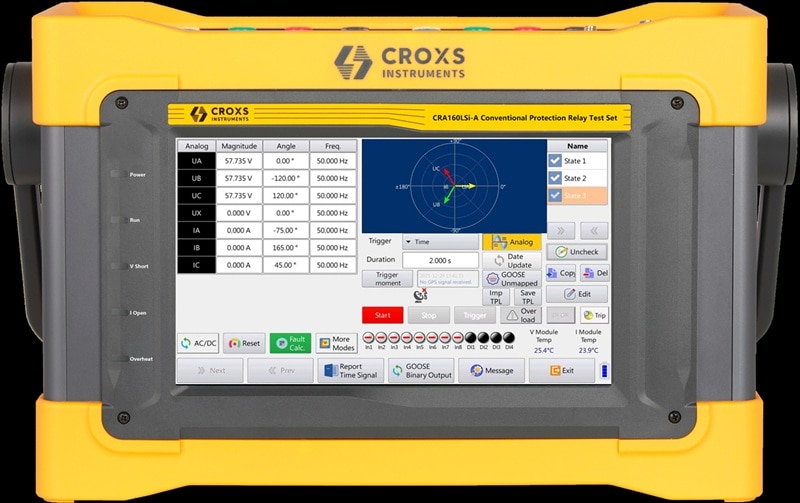 | Protection Relay Test System CRA160LSi-A Three Phase Automatic 6U6I Relay Test Set (AC-Mains Operated) The CRA160LSi-A is an automated, AC-mains-operated secondary injection test system (6U6I) designed for high-precision, analog testing of relays,... View product → |
 | PRODUCTS The MP3000A Universal Relay Testing System is a state-of-the-art solution engineered for precision, reliability, and efficiency in relay testing. View product → |
Frequently asked questions
Which industrial engineering roles need relay-testing capability?
Protection engineers, commissioning engineers, maintenance engineers responsible for relay performance, and testing contractors need direct relay-testing capability. Design engineers and plant managers usually need test records and technical oversight rather than hands-on access.
When does access justify owning a protection relay test system?
Ownership is justified when testing is frequent, outages are costly, qualified staff can operate the equipment, and waiting for an external contractor threatens commissioning or maintenance schedules.
What does secondary injection prove?
Secondary injection proves that a relay responds to injected current and voltage according to its settings, logic, timing, and trip outputs. It does not prove the CT primary circuit, CT ratio under load, wiring integrity outside the test boundary, breaker mechanical operation, or the complete primary system.
How should a plant plan and perform a relay test?
Define the protection function and acceptance criteria, isolate the relay safely, record existing settings, inspect wiring, connect the test set, run pickup, timing, logic, and trip tests, compare results with limits, restore settings, and obtain sign-off.
How should you decide what relay test system to buy?
Match the system to your relay types and test volume, then compare current and voltage channels, output capability, timing accuracy, software automation, portability, training, calibration support, and local service.
Related products
 | Protection Relay Test System CRA160LHi-A Three Phase Automatic Relay Test Set (AC-Mains, Extended 4x300V Voltage) CRA160LHi-A Three Phase Automatic Relay Test Set (AC-Mains, Extended 4x300V Voltage) The CRA160LHi-A Protection Relay Test Set is a premium,... View product → |
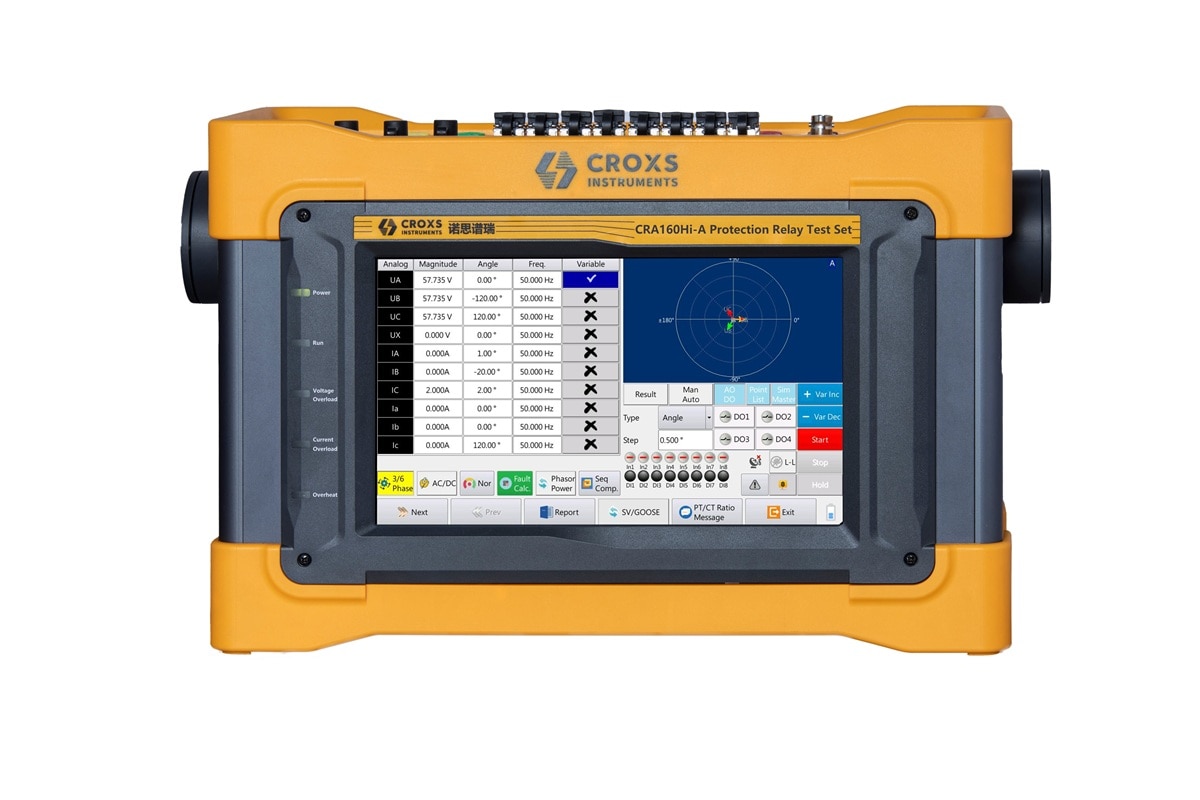 | Protection Relay Test System CROXS Advanced Protection Relay Test System (High Accuracy) Myriad Industrial Solutions LLP offers professional-grade protection relay test systems engineered for electrical substation commissioning,... View product → |
 | Protection Relay Test System CRA160Hi-A Three Phase Automatic Relay Test Set (IEC 61850 Digital Smart Grid Tester) The CROXS CRA160Hi-A is an automatic, secondary injection relay test system designed for digital substations, generation plants, and high-voltage... View product → |
 | PRODUCTS Three phase automatic Relay test set Six Phase Protection Test System The powerful three-phase relay test set MP3000A is designed for multipurpose field test and commissioning... View product → |