


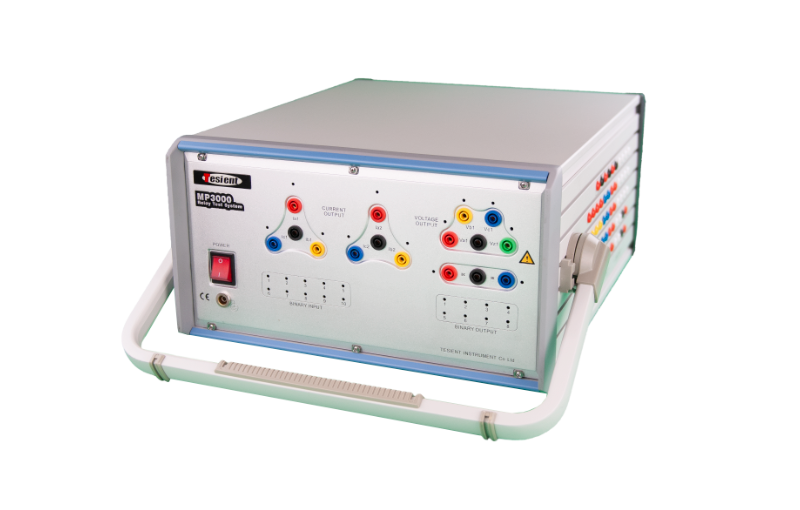
Which are common fault types simulated by a relay test set?
A relay test set is used to simulate various fault types in order to test the performance and accuracy of protective relays. Some common fault types that can be simulated by a relay test set include:
Phase-to-Ground Fault: This fault occurs when one phase of a three-phase system comes into contact with the ground.
Three-Phase Fault: This fault occurs when all three phases of a three-phase system come into contact with each other.
Two-Phase Fault: This fault occurs when two phases of a three-phase system come into contact with each other.
Broken Wire Fault: This fault occurs when a wire in the system is broken, resulting in an open circuit.
Short Circuit Fault: This fault occurs when a low-resistance path is created between two points in the system, causing a high current flow.
Overcurrent Fault: This fault occurs when the current in the system exceeds a predetermined threshold.
Overvoltage Fault: This fault occurs when the voltage in the system exceeds a predetermined threshold.
Undervoltage Fault: This fault occurs when the voltage in the system falls below a predetermined threshold.
These fault types can be simulated by generating specific test signals and injecting them into the relay test set, which then evaluates the response of the protective relays. This allows for the testing and verification of the relays' ability to detect and respond to different fault conditions accurately and in a timely manner.
Supplier of protection relay test set in India
Supplier of three phase relay test set .
Distributor of relay test set
Universal relay test system supplier