
When performing maintenance on a high-voltage circuit breaker (HV CB) in an active substation, it is essential to apply grounding on both sides for safety reasons. This precaution safeguards personnel from potential induced voltages or accidental exposure to high voltage. For contact resistance measurement using a micro-ohmmeter, the HV CB must be in the closed position. However, when the breaker is closed and grounded on both sides, the circuit effectively forms two parallel resistance paths — one through the breaker contacts and the other through the grounding conductors. This parallel configuration can influence the accuracy of the contact resistance reading. To avoid measurement errors caused by parallel resistances, the CB is ideally grounded on only one side during testing. This setup ensures that only the breaker’s own contact resistance is measured, yielding more accurate results. Nevertheless, disconnecting one ground connection decreases safety for maintenance personnel. Therefore, maintaining grounding on both sides is necessary for safe working conditions. The key concern is how much this dual grounding setup affects the measured contact resistance and whether the variation is considerable. To investigate this, a series of tests were conducted across multiple substations to evaluate the impact of the grounding circuit, acting as a parallel resistance, on HV CB contact-resistance measurements. When testing a circuit breaker (CB) that is grounded on both sides, the measured resistance tends to be lower than the actual value by the amounts indicated in the table above. The measurement deviation depends on the resistance of the grounding circuit, which can vary based on factors such as the condition of the disconnector grounding blades and the contact quality of the portable grounding device used. Overall, for a preliminary assessment of the HV CB’s condition, measuring contact resistance with both sides grounded is a more practical approach. This method ensures complete personnel safety and eliminates the need for additional steps to remove grounding on one side of the circuit breaker.


This is your website preview.
Currently it only shows your basic business info. Start adding relevant business details such as description, images and products or services to gain your customers attention by using Boost 360 android app / iOS App / web portal.
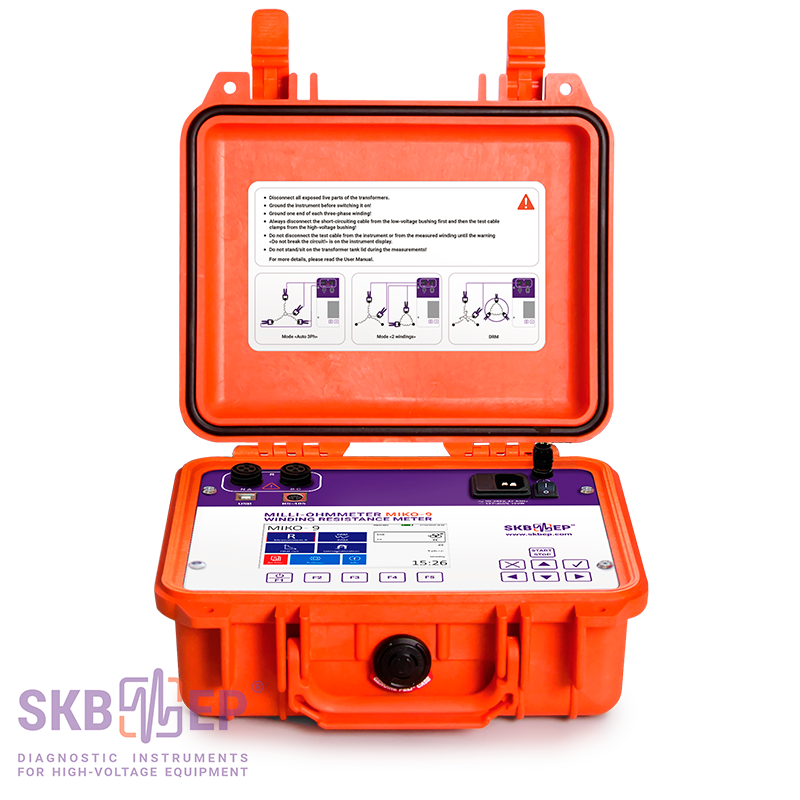
Circuit breaker contact resistance measurement with dual side grounding.
2026-02-20T06:57:41
When performing maintenance on a high-voltage circuit breaker (HV CB) in an active substation, it is essential to apply grounding on both sides for safety reasons. This precaution safeguards personnel from potential induced voltages or accidental exposure to high voltage. For contact resistance measurement using a micro-ohmmeter, the HV CB must be in the closed position. However, when the breaker is closed and grounded on both sides, the circuit effectively forms two parallel resistance paths — one through the breaker contacts and the other through the grounding conductors. This parallel configuration can influence the accuracy of the contact resistance reading. To avoid measurement errors caused by parallel resistances, the CB is ideally grounded on only one side during testing. This setup ensures that only the breaker’s own contact resistance is measured, yielding more accurate results. Nevertheless, disconnecting one ground connection decreases safety for maintenance personnel. Therefore, maintaining grounding on both sides is necessary for safe working conditions. The key concern is how much this dual grounding setup affects the measured contact resistance and whether the variation is considerable. To investigate this, a series of tests were conducted across multiple substations to evaluate the impact of the grounding circuit, acting as a parallel resistance, on HV CB contact-resistance measurements. When testing a circuit breaker (CB) that is grounded on both sides, the measured resistance tends to be lower than the actual value by the amounts indicated in the table above. The measurement deviation depends on the resistance of the grounding circuit, which can vary based on factors such as the condition of the disconnector grounding blades and the contact quality of the portable grounding device used. Overall, for a preliminary assessment of the HV CB’s condition, measuring contact resistance with both sides grounded is a more practical approach. This method ensures complete personnel safety and eliminates the need for additional steps to remove grounding on one side of the circuit breaker.
2026-02-20T06:57:41


Keywords
- HV CB condition assessment
- effects of dual grounding on accuracy
- safe maintenance practices HV CB
- parallel resistance circuit breaker
- grounding impact on resistance readings
- micro-ohmmeter contact resistance
- contact resistance measurement safety
- high-voltage circuit breaker testing
- dual side grounding HV CB
- circuit breaker contact resistance measurement
Submit Your Enquiry